Blend it - Blur it - Blot it - Brush it - Drip it - Feather it - Layer it - Mix it - Modify it - Roll it - Smudge it - Stipple it - Splash it - Swirl it…
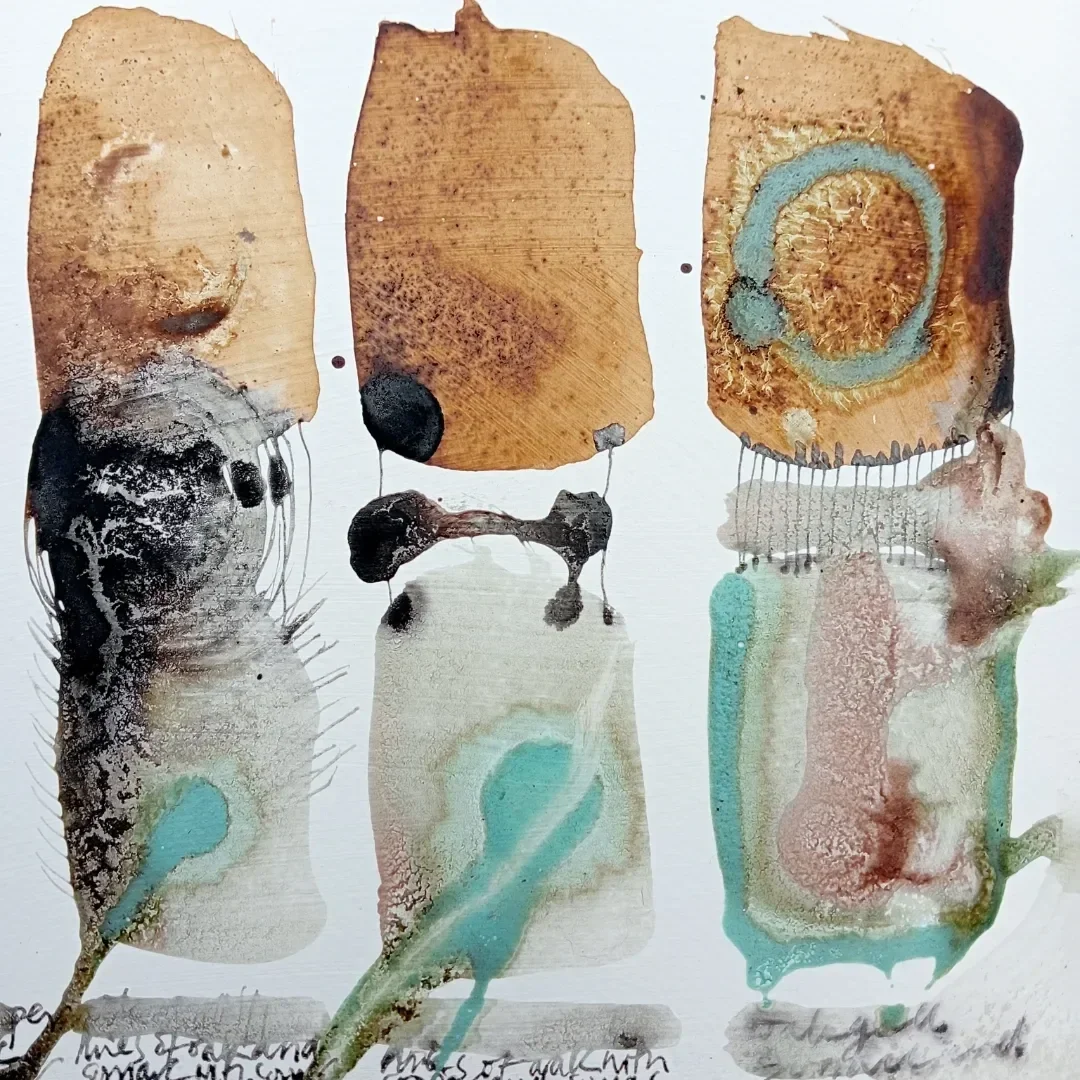
General Guidance:
When you use our products, you are entering into our world of making. To a new way of being and thinking with the land. We hope you get enormous pleasure from it, as we do.
There are a few guidelines, as well as health and safety notes, that it is essential you know when using our inks:
All our inks are hand-ground and hand-filtered. Because we do not use machinery, so they will not be as fine as industrial-grade inks. We sieve to 200 microns, which is pretty fine, but you may still be able to feel the pigment suspended in the mediums. For us, this is all part of how we work with these inks; we let the properties of each pigment have their own character when we are working with them. We lean in to this character rather than seeing it as an imperfection.
Minerals are present in the ground earth pigments, and in the alum and soda ash used to make lake pigments with botanicals. Whilst these are still natural elements, they can be mild irritants. Mostly, this will be no more caustic than bicarbonate of soda, but should be treated with caution on sensitive skin and should definitely never be consumed.
Good hand-washing practices between the use of these inks and the consumption of food or drink is key, do not put hands in or near your mouth without washing them first.
Mushroom-based pigments are highly likely to contain active spores, and so should also be handled with the respect that requires.
Please keep out of the reach of animals. Children should not use these inks unsupervised.
How to use our drawing inks:
In this video you can see Sarah on the coastline using our drawing inks as part of her practice. Sarah goes to the beach daily to swim and paint with handmade inks. In the video you can see her drawing with pencil over the top of the drawing inks, using a range of brushes and a dip pen*. We hope this video will give you some ideas for your own creative adventures!
These are wild inks - many will change with time, with interaction with other materials, and they will have less of a shelf life than industrial inks. They are alive, they are alchemy, they are magic! To work with natural ink is to engage in a collaboration with our extraordinary planet. Instead of imposing our will, we learn from the materials we work with; they surprise us, teach us and draw us in to a more intimate relationship with them.
*Please note that our drawing inks are not suitable for use in fountain pens; please use dip pens and/or brushes
DID YOU KNOW: There are two types of colour in the botanical world - colour fast and fugitive. Colour fast are generally the colours famously used in dyeing and have been used for many years (e.g. Dyer’s Chamomile) because they are known to be more light fast. Fugitive colour literally ‘runs away’ over time. Sarah works with both. She likes the alchemical nature of working with them and being responsive to their characters. She often adds modifiers to change what the colour does - soda ash, salt, vinegar, copper, iron and so on.
“What we need is a great. tremulous falling back in love with our old, ancient, primordial BELOVED, which is the earth.”
(Dr Martin Shaw)
How to use our relief inks:
“Matter feels, converses, suffers, desires, yearns and remembers.”
(Karen Barad)
In these videos you can see Elizabeth on the coastline using her relief inks to create en plein air contact prints. This is a medium of her own recipe made of various plant-based oils. In the video you can see her rubbing the ink directly into the texture of the leaf and then using this to lift a print on rice paper where she acts like the printing press, putting pressure on the back of the paper.
In the second clip you can see Elizabeth and Sarah working with the relief inks together using relief ink made with colour from a huge oak tree that fell in Sarah’s garden during Storm Goretti (a storm in 2026 which devastated Cornwall, part of increasing extreme weather due to climate change). They are working on a project using multiple elements of the tree to create an archive in its honour.
The non-traditional oil medium is made from several oils, shea butter, and soya wax to make them as safe as possible on the skin. This is because Elizabeth uses these in performances and is, therefore, regularly in direct contact with them. The base of these inks is essentially a moisturiser, and we use it as such! We regularly have a pot of medium on the go to restore our skin after a long day in the studio. You can even buy yourself a tub to use for this purpose. This again characterises our unique relationship with these inks. This approach has been part of reducing waste in our studios, particularly getting rid of disposable gloves, which are, obviously, terrible for the planet!
These inks can be used for almost any form of relief printing; lino printing, collograph, tetra pak printing, gelli plate, etching, and so on. They are softer than standard relief inks and so can be easily blended by hand on the plate. You may need to adjust your process to work with these inks, please contact us for advice if needed.
DID YOU KNOW: Gyotaku (from gyo meaning fish and taku meaning rubbing) is an ancient Japanese form of printing fish. In this process you apply ink directly to the chosen fish specimen then a rice paper is used to lift a print. This is the process that inspired Elizabeth to find a way to lift prints directly when walking.
How to use our watercolour palettes:
In this video you can see Sarah using our watercolour paints to respond to rocks and seaweed on Swanpool beach.
You just need paper or a sketchbook, one of our palettes, some watercolour brushes, and some water (you can always try sea water!)
The more water you use the lighter the colour, the less water the stronger the pigment will be - happy painting!
DID YOU KNOW: Traditionally watercolours were made by integrating ground up pigments with gum arabic. At Cornish Inks we use local tree saps/ gums as part of our foraging practice and commitment to place-based making.
How to use our pigment powders:
If you are already on your own journey with pigments, or want to start, then buying our raw pigment collections may be the best choice for you!
You can use our collections of pigment colours to make your own paints and printmaking inks. Watch this short video of the mullering process and reach out for guidance if you need it. You can also sign up for our workshops to learn how to do this.
Health and Safety: Anything, however natural, in powder form is carcinogenic; please use appropriate PPE when using the raw powdered pigments, even if you can't see them spreading dust, they are, and you do not want to be regularly breathing this in. We use respirators when grinding this material.
DID YOU KNOW: Many natural pigment powders can be used as colourants in glazes. If you are a ceramicist and want to work with our products, please use the contact form to reach out.
“Hope, like love, means taking risks and being vulnerable to the effects of loss. It means recognising the uncertainty of the future and making a commitment to shaping it.”
(Rebecca Solnit)